-
-
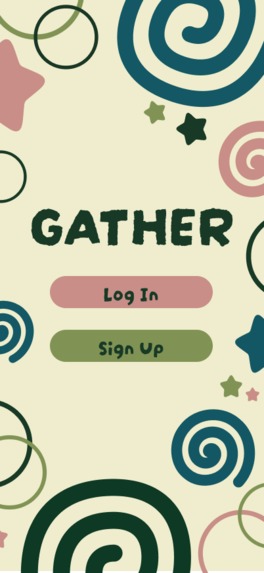
Welcome Page
-
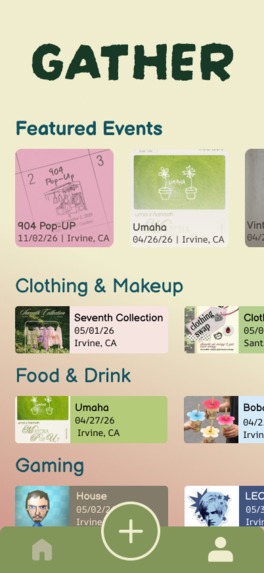
Dashboard/Explore Page
-
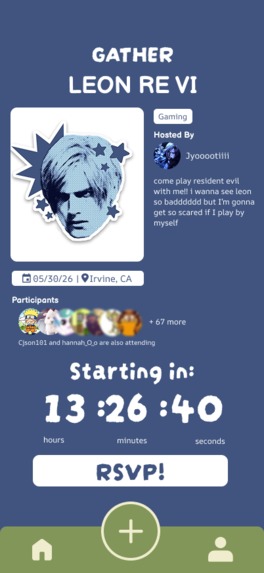
Sample RSVP Page
-
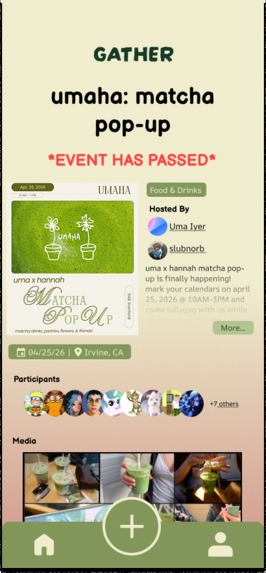
Sample Past Event Page
-
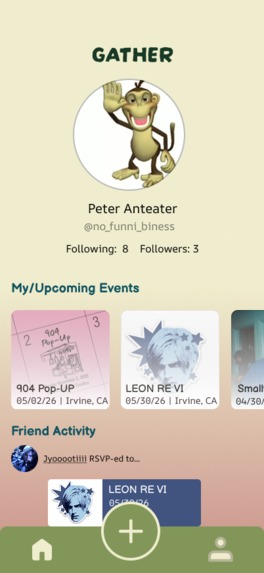
Profile Page
-
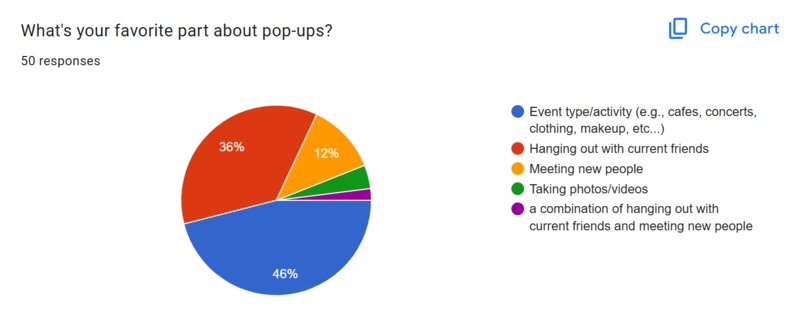
User Research Response


Inspiration
Pop-up events are driven by their temporary nature, and people naturally attend because of their controlled scarcity, as the fleeting nature of a pop-up produces a sense of exclusivity that is driven by urgency and engagement. Our app is designed to call out the balance between experiences that feel rare and special, yet remaining inclusive to its communities, allowing diverse groups of people to gather around a shared moment. By prioritizing time-sensitive, experience-driven events that reflect niche interests and situationally unique memories, our platform aims to create a space where users can discover new environments and form connections through presence rather than planning.
What it does
This app encourages users to engage in the discovery and participation of events that feel immediate and personal. Rather than functioning as a traditional event platform, it encourages users to engage in pop-ups that reflect emerging subcultures, strengthens communities set outside mass-market social spaces, and build meaningful connections rooted in shared, in-person moments.
Across 25% of our user survey responses, users perceive pop-ups as unique, activity-driven experience that enable exploration with social interaction and community-building. As a result, users feel more motivated by the experiences in addition to the social aspect of pop-ups. Our platform is designed to call attention to the low-risk experimentation space for identity and exploring interests while developing organic connections. The non-permanent, ephemeral essence of pop-up events keep experiences feeling fresh and worth attending.
With roughly more than 46% of users stating that their favorite part about pop-ups being the event activity, Gather aims to draw users to pop-up events for their activity-driven experiences while bridging opportunities for engagement with people from communities of similar interest. In addition to seeking more accessible ways to discover local pop-up events outside of big social media platforms such as TikTok and Instagram, Gather supports users in translating discovery into participation, prioritizing unique, experience-driven events that naturally foster newfound friendships and community involvement.
How we built it
We used Figma for prototyping, Procreate to create our Lo-Fi's and Mid-Fi's and Pinterest for gathering design inspiration and stock images.
Challenges we ran into
Initially, we had ideated of creating a product that helps users relive memories made from pop-up events, reflecting our own challenges from past experiences. However, after conducting our user research, we learned that our audience is driven by event activity, which shifted our focus to building community around the exploration of pop-up events.
Accomplishments that we're proud of
We were excited that we received so much user data and anecdotes that helped frame our design process. We were proud that we were able to apply what we have learned throughout our Informatics classes and organically come to a "problem," rather than diving into the design process assuming our audiences needs and wants.
What we learned
- Experiences drive attendance, and not just socialization. About 60% of users voiced that the activity itself is important (e.g., trying new food, exploring themed spaces, engaging in unique events) ⟶ Pop-ups are indicative as experience-first environments
- Social aspects are important (e.g., 65% of respondents mentioned spending time with friends and meeting new people during pop-ups as significant), but are outcomes that enhance the experience rather than define it.
- Novelty and uniqueness are valued. Pop-ups are valued as spaces for exploration by ~55% of users, and allow them to try something new, experiencing familiar interests in a different way
- Temporary nature increases perceived value. The temporary nature of pop-ups makes them feel more special and worthwhile, as users know that they will not be available forever.
What's next for Gather
- Implementing a system that balances user preferences and exploration of new, unique events that may be unconventional to the user. Shifting more our current scaffolding framework with pre-made categories to more individualized algorithms for users (e.g., implementing hobby/subculture tags, such as underground DJ events, art installations, product launch showcases)
- Contextual signals: “What do you feel like doing right now?” (e.g., activities that are more lax vs. activities that require more physical movement)
- Not limited to picking categories, allowing users to choose the type of experience they feel like exploring, giving them autonomy over how they want to engage, rather than limiting them to selecting predefined categories from the platform
- Allowing user-submitted tags that can be used for filters. Contributing with descriptive tags to drive community-centric experiences that may not appear on traditional event platforms
Built With
- canva
- figma
- procreate


Log in or sign up for Devpost to join the conversation.