-
-
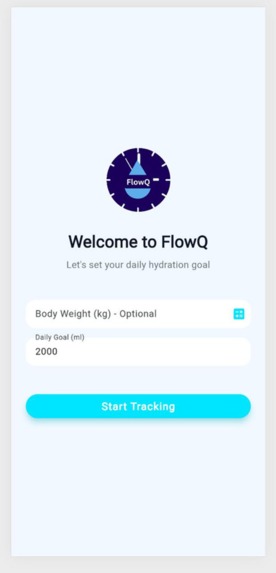
Login & Water Intake Target Page
-
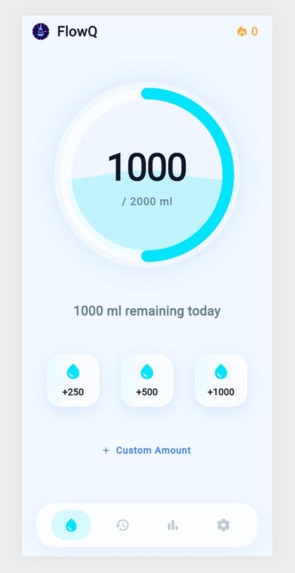
Water Intake Log Page
-
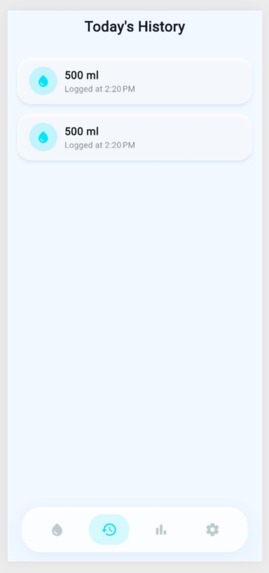
Water Log History Page
-
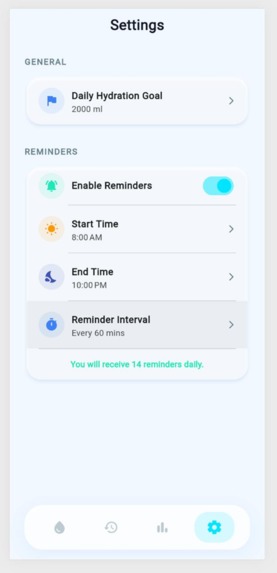
Settings Pane
-
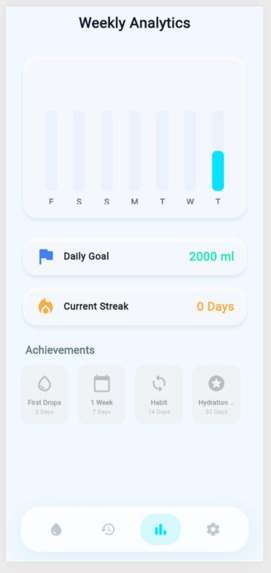
Streak Records & Badges Page
-
Project Logo


Inspiration
An average human is recommended to drink 2.5 litres of water daily. Individuals often have a tendency to neglect their water intake, due to reasons diverse such as hectic routine, unfulfilled thirst, limited access to fluids and prevention of urination. Less water intake causes dehydration and fatigue. Prolonged dehydration may affect the heart, kidneys, and brain, as well as the skin, bones, joints, digestion, and immune system.
What it does
To solve the problem faced by people in not fulfilling their hydration targets, the team has proposed the development of a hydration tracker and reminder system. The application shall involve notifications to remind the user to hydrate themselves. It also includes badges/digital credentials, which are given to the user upon completion of particular tasks.
Features
FlowQ includes a wide range of features designed to promote consistent hydration habits. It supports offline-first water intake logging, allowing users to track their consumption without requiring an internet connection. The app provides daily hydration goals along with a quick logging dashboard for ease of use. Users can view their history logs and benefit from gamification elements such as streak tracking, badges, and achievements. Additionally, the app offers analytical graphs to visualise hydration patterns, customised notifications, smart reminders, and configurable active time ranges. An intuitive onboarding flow ensures a smooth user experience from the start.
How we built it
FlowQ is a hydration tracking and reminder application which works without any internet connections. For a smooth Android experience, Dart/Flutter is used for the development of the application. Local storage is handled by Hive to ensure offline data handling. A rule-based logic system for hydration tracking and reminders was formulated based on BMI (Body Mass Index). For real-time alerts, integrated notification services were utilised. A clean and intuitive UI for easy user interaction was designed. Chart libraries were utilised to visualise weekly hydration trends.
Challenges we ran into
During development, we faced several challenges. Designing a smart reminder system that is both simple and effective without relying on complex AI models was a key difficulty. Managing real-time updates for hydration tracking while keeping the UI synchronised required careful handling. Structuring data efficiently for daily logs and analytics posed another challenge. Additionally, ensuring smooth collaboration among team members and avoiding code conflicts was crucial. Balancing the inclusion of multiple features within a strict 2-week development timeline was also a significant constraint.
Accomplishments that we're proud of
We are proud to have successfully built a fully functional hydration tracker within a limited timeframe. The implementation of smart reminders and hydration scoring logic added meaningful value to the app. We created an engaging experience through streaks and badges, enhancing user motivation. The app also features a clean and user-friendly interface. Furthermore, we developed a scalable architecture that allows for future enhancements and feature expansion.
What we learned
This project helped us understand the importance of modular architecture and maintaining a clean code structure. We gained practical experience in using local databases like Hive for mobile applications. We also learned how to handle notifications and background logic effectively in Flutter. Working as a team improved our collaboration skills, particularly in using Git and branching strategies. Most importantly, we learned how to design user-centric features that encourage positive behavioural changes.
What's next for FlowQ: Hydrate Right, Hydrate Now
In the future, we plan to enhance FlowQ by integrating AI-based personalised hydration recommendations. We aim to connect the app with health platforms for real-time activity tracking. Advanced analytics and deeper insights will be introduced to provide more value to users. Gamification will be expanded with features like leaderboards and social engagement. Finally, we plan to deploy the application on the Play Store to reach a wider audience.


Log in or sign up for Devpost to join the conversation.